

Truck-mounted cranes are increasingly favored for their convenience and versatility, with growing popularity in southern China. The two most common types are telescopic boom and knuckle boom cranes. What are the strengths and weaknesses of each? How should you choose? Shandong Enmax Machinery Co., Ltd., a professional manufacturer, provides the following objective comparison.
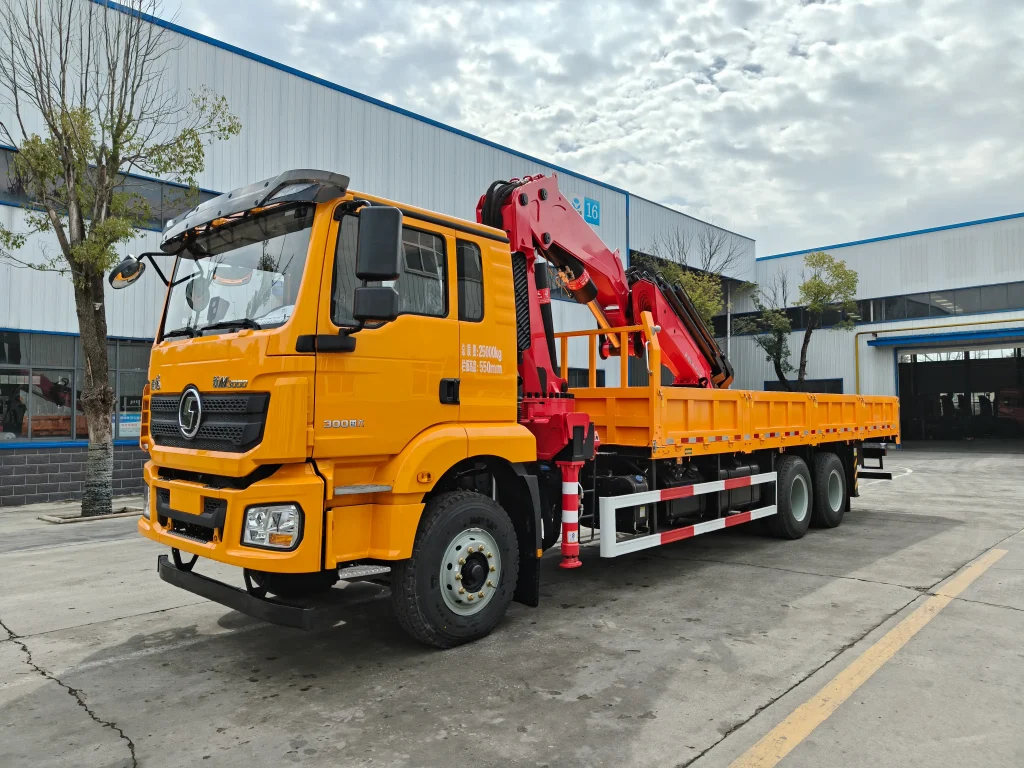
1. Enhanced Operational Efficiency: Advantage – Knuckle Boom
Knuckle boom cranes utilize multiple hydraulic cylinders to create an articulated arm structure, enabling faster movement cycles and superior operational efficiency. In contrast, telescopic boom cranes employ a wire rope hoisting system, where the drum winds or unwinds the rope to raise or lower the hook, resulting in relatively slower workflow.
2. Superior Working Radius: Advantage – Telescopic Boom
With the same boom length, telescopic cranes can extend their vertical reach by paying out more wire rope. Knuckle boom cranes struggle with tasks requiring significant depth.
3. Superior Performance in Confined Spaces: Advantage – Knuckle Boom
The compact, folding design of knuckle boom cranes makes them ideal for tight spaces like factories and warehouses. Telescopic booms require more open space for operation due to their linear extension mechanism.
4. Precise Vertical Lifting Control: Advantage – Telescopic Boom
The wire rope hoisting mechanism of telescopic cranes allows for precise control over the load’s vertical movement. The hydraulic cylinder system of knuckle boom cranes makes true vertical lifting more challenging to manage.
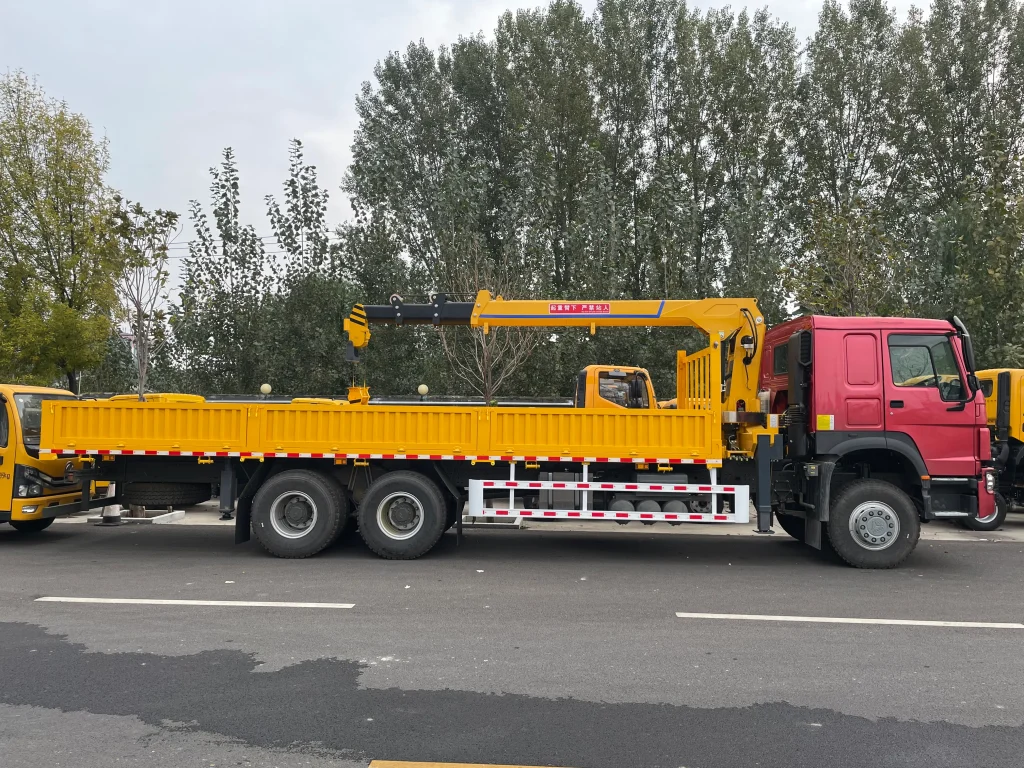
5. Versatile Attachment Compatibility: Advantage – Knuckle Boom
The hydraulic system and articulated design of knuckle booms allow them to be equipped with various attachments, turning them into multi-functional tools. These can include aerial work platforms, personnel baskets, clamps, forks, grapples, augers, tire manipulators, and extractors. The flexible wire rope at the end of a telescopic boom makes attachment integration rare and impractical.
6. Ease of Operation: Advantage – Telescopic Boom
Telescopic cranes, with their straightforward wire rope drum system, are relatively simpler to operate. Knuckle boom cranes, coordinating multiple hydraulic cylinders for robotic-arm-like movements, have a steeper learning curve.
7. Compact Transport Profile: Advantage – Knuckle Boom
The advantage in space usage is clear. Knuckle boom cranes can fold into a compact bundle during transport, minimizing space consumption. Telescopic booms must remain extended horizontally, occupying significantly more space on the vehicle during travel.
8. Simplified Chassis Integration: Advantage – Telescopic Boom
The linearly distributed structure of a telescopic boom aids in dispersing the load across the truck chassis. Its center of gravity is also further from the mounting point, which helps distribute axle loads more effectively, especially when lifting heavy loads. The concentrated design and weight of a knuckle boom, whether mounted mid or rear, often place a heavier load on a specific axle, presenting a greater challenge for balanced chassis integration.
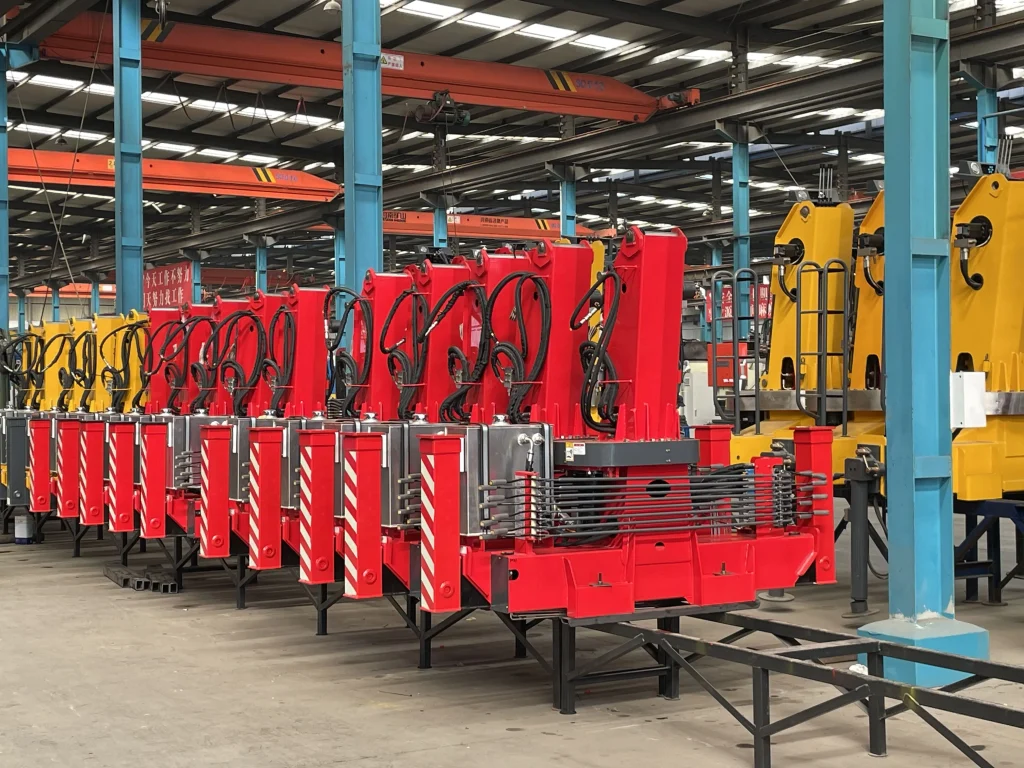
9. Cost-Effectiveness: Advantage – Telescopic Boom
Knuckle boom cranes, with their more complex structure and higher manufacturing precision requirements, generally have a higher manufacturing cost and price point. Telescopic booms, with their relatively simpler design and lower precision demands, are more cost-effective to produce.
By reviewing these 9 key points, the choice between a knuckle boom and a telescopic boom crane becomes clearer. Ultimately, no single type is universally best; the optimal choice depends entirely on your specific application. Knuckle boom cranes excel in confined spaces and for specialized tasks using attachments. Telescopic boom cranes are better suited for open environments and standard vertical lifting. Select the crane that best matches your primary working conditions.
[Contact Enmax Machinery Today for Your Personalized Crane Solution!]
 English
  Русский