What Makes Spider Cranes Unique?
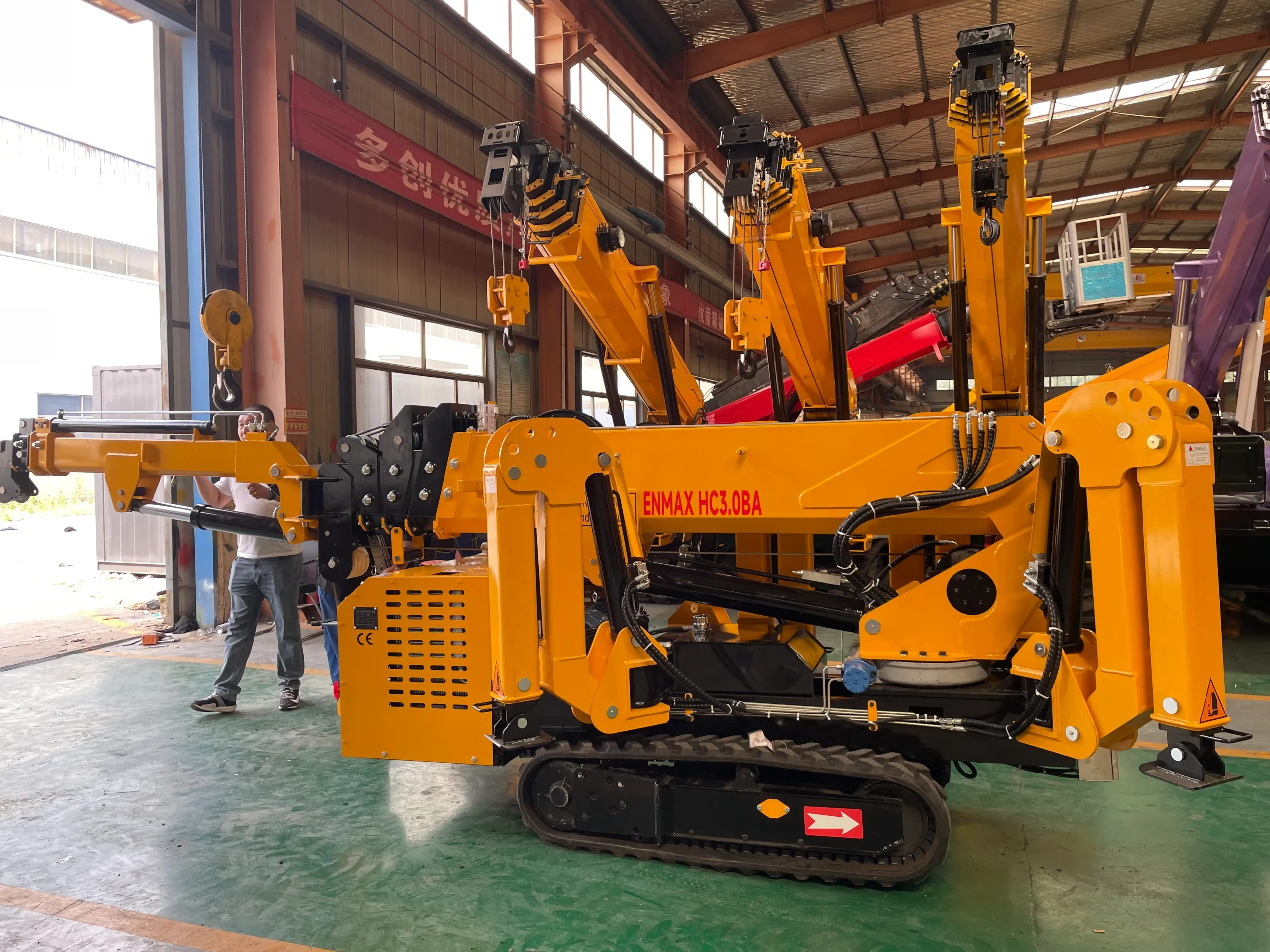
Spider cranes (蜘蛛起重机), also known as spider lifts or crawler cranes, are compact lifting systems characterized by four independently adjustable outriggers and a lightweight, often rubber-tracked chassis. Resembling a spider’s legs, these outriggers provide exceptional stability on challenging terrains while enabling access to spaces traditional cranes cannot reach. Initially developed for specialized European urban projects, spider cranes now serve diverse sectors—from skyscraper maintenance in Shanghai to forest conservation in Yunnan.
Core Advantages: Where Spider Cranes Excel
- Unmatched Terrain Adaptability
Spider cranes conquer slopes (up to 25°), mud, sand, stairs, and uneven ground thanks to their articulating outriggers and low-ground-pressure tracks. Each leg adjusts individually to stabilize the crane on surfaces where conventional cranes would sink or tilt—critical for swampy landscapes, mountainous areas, or indoor marble floors. - Compact Design for Confined Spaces
With stowed widths as narrow as 0.85 m and heights under 2 m, spider cranes navigate narrow alleys, standard doorways, and crowded interiors—ideal for historical renovations, mall retrofits, or subway stations. Despite this small footprint, they achieve working heights up to 43.2 m. - Triple-Power Versatility
Operators switch seamlessly between electric (for zero-emission indoor use), diesel, or AC power sources. This flexibility enables 24/7 operation in eco-sensitive zones like museums, hospitals, or food-processing plants. - Enhanced Safety & Control
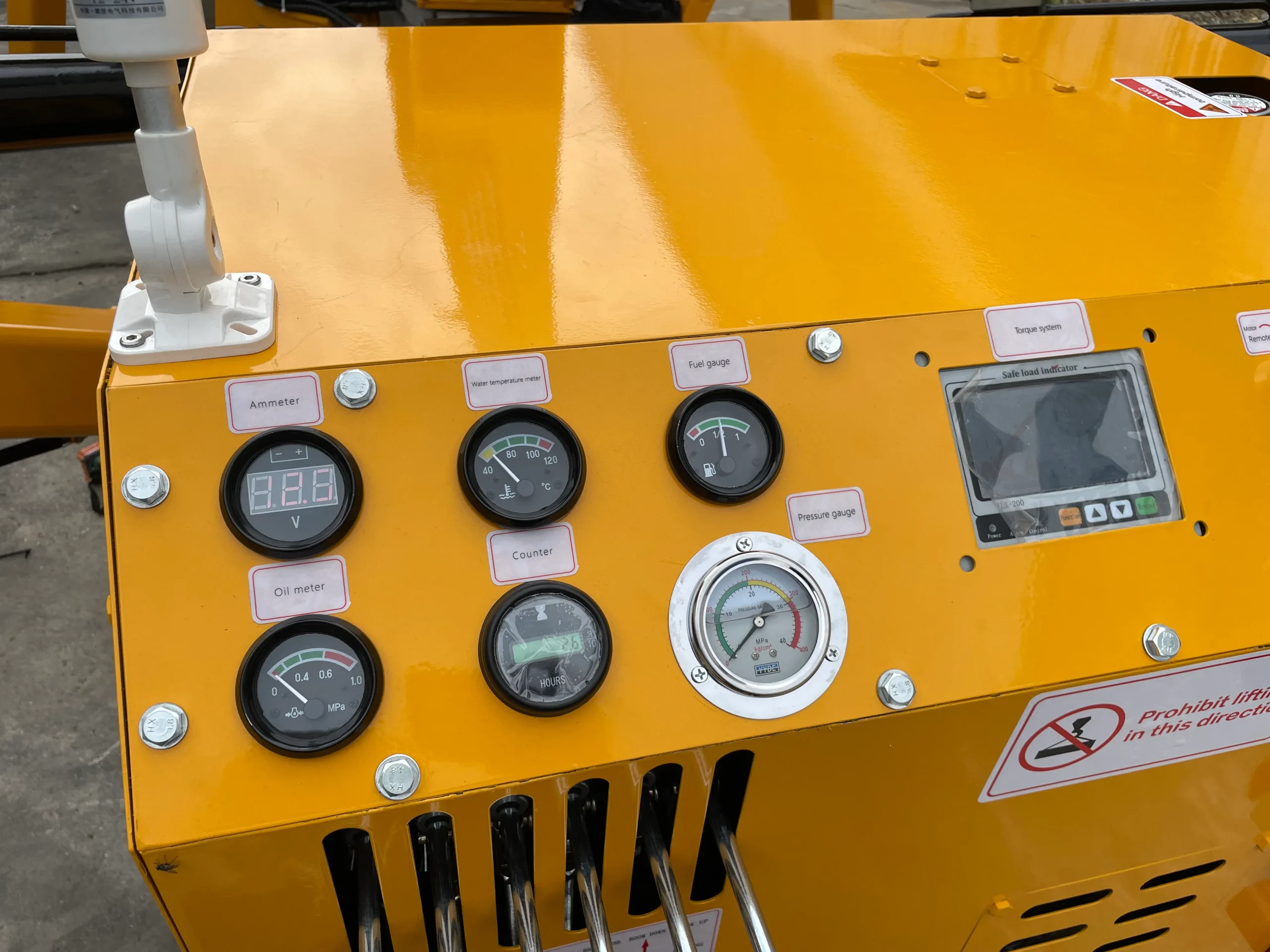
Integrated safety systems include:
- Automatic leveling and overload protection
- Tilt sensors and dual emergency descent mechanisms
- Centralized joystick controls (2–3 levers manage all functions), reducing operator error.
Limitations and Operational Constraints
- Payload and Height Restrictions
While agile, spider cranes typically lift ≤230 kg at full extension—sufficient for HVAC units or glass panels but inadequate for heavy steel beams. Max working heights rarely exceed 50 m, limiting ultra-tall construction roles. - Deployment Complexity
Setup demands expertise: outrigger positioning must account for ground load-bearing capacity (e.g., mall tiles vs. soft soil). Operators require rigorous certification—inexperienced users risk instability or accidents.
Productivity Comparison: Spider Cranes vs. Alternatives
| Scenario | Spider Crane Efficiency Gain | Key Reasons |
|---|---|---|
| vs. Scaffolding | 50%+ time reduction | No assembly/disassembly; instant deployment |
| vs. Conventional Boom Lifts | 20–40% faster in tight spaces | Narrow access, superior stability on slopes/soft ground |
| Repetitive Tasks | 30% labor cost savings | 1–2 operators replace 3–5 workers for tasks like light installation |
Critical Applications by Industry
- Commercial & Public Spaces:
Mall lighting repairs, airport ceiling maintenance, and stadium banner installations where floor protection and quiet operation matter. - Urban Infrastructure:
Bridge inspections, narrow-lane utility work (e.g., power line repairs in Beijing hutongs). - Specialized Environments:
- Forestry: Tree-trimming in dense woods without damaging terrain.
- Film Production: Elevated camera platforms on rugged locations.
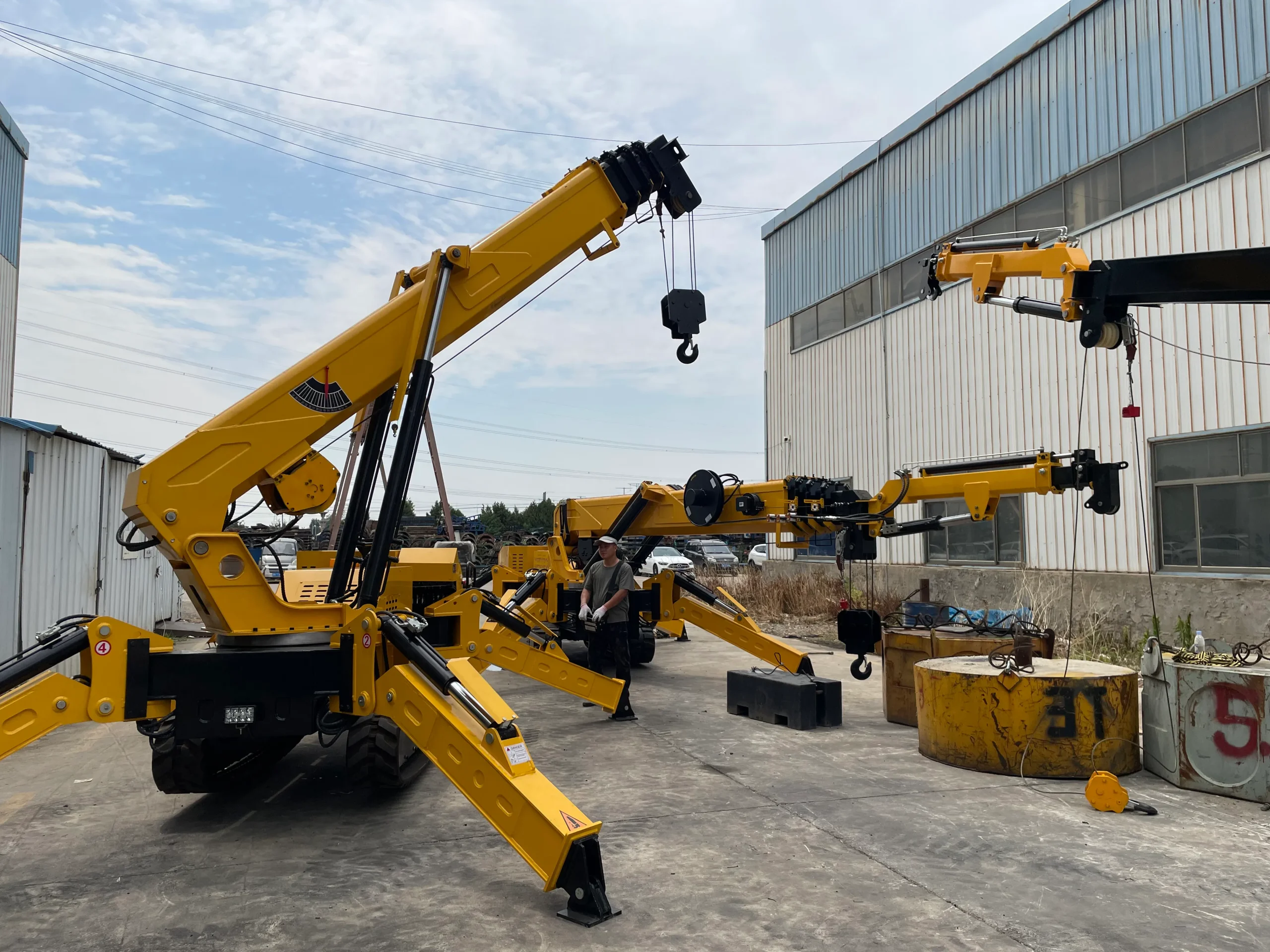
Telescopic vs. Articulating Booms: Choosing Wisely
| Feature | Telescopic Boom (直臂式) | Articulating Boom (折臂式) |
|---|---|---|
| Reach/Height | Superior vertical reach (e.g., deep voids) | Excels around obstacles (e.g., roof overhangs) |
| Precision | Smooth load control via cable systems | Agile positioning; faster cycle times |
| Indoor Use | Limited swing space needed | Compact folded size; ideal for tight rooms |
| Attachments | Basic (hooks) | Forks, baskets, augers for multi-tasking |
Conclusion: Strategic Niche for Modern Challenges
Spider cranes redefine accessibility in constrained or unstable environments—transforming previously impractical tasks (e.g., heritage site restorations or rooftop installations) into efficient operations. While their payload and cost remain limiting factors, their terrain agility, space-saving design, and eco-compliance make them indispensable for urban development, sensitive interiors, and emergency response.
Future Outlook: Hybrid power systems and AI-assisted stabilization will expand capabilities, while China’s rental market growth (e.g., Shandong-based fleets) lowers entry barriers.
Maximize your project’s flexibility—explore spider crane solutions today for jobs where space, ground conditions, or emissions constrain traditional equipment.